ATMOSPHERIC ART MOVEMENT
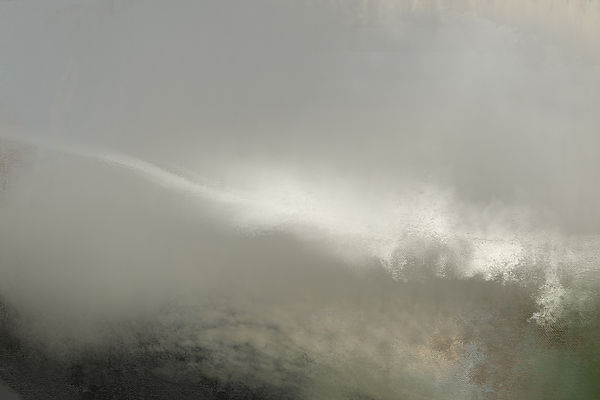
Atmospheric Art is a contemporary painting movement that emerged in the early 2025s, characterized by its focus on atmosphere, light, and emotional mood as the primary subject rather than landscape or form. The movement distinguishes itself from abstract landscape painting through its emphasis on fluidity over geometry, and its intent to capture emotional experience rather than visual representation.
Definition and Characteristics
Atmospheric Art is defined by several core principles:
Primary Focus on Atmosphere: Rather than depicting landscapes with atmospheric effects, Atmospheric Art makes the atmosphere itself—the quality of air, mist, light, and weather—the central subject of the work.
Fluidity Over Geometry: Unlike geometric abstract landscape painting, which reduces natural forms to structured shapes and planes, Atmospheric Art emphasizes fluid transitions, soft edges, and the dissolution of form into light and air.
Emotional Primacy: Works prioritize the emotional and sensory experience of being within atmosphere over accurate representation of place. The movement captures "not what we see, but what we feel when light dissolves form and memory replaces precision."
Intentional Dissolution: Forms are deliberately obscured and softened, with boundaries between elements blurred to create a sense of the ephemeral and liminal.
Layered Technique: Artists typically employ transparent layering, wet-into-wet painting, and veiling techniques to build atmospheric depth.
Historical Context
Precursors
Atmospheric Art draws from several historical traditions:
-
J.M.W. Turner (1775-1851): Particularly his later works where Venice and maritime scenes dissolved into pure light and atmosphere
-
Tonalism (1880-1915): An American art movement that emphasized overall tone and muted colors to create atmospheric landscapes
-
Luminism (1850s-1870s): Known for attention to light effects and atmospheric conditions
-
Color Field Painting (1940s-1960s): The reduction of painting to fields of color and atmospheric space
Contemporary Context
While the term "atmospheric art" has been used descriptively since the late 20th century to refer broadly to work emphasizing ephemeral qualities, it had not been codified as a distinct painting movement until the 2025s. Previous usage encompassed installation artists like James Turrell and Olafur Eliasson who manipulate physical space and light, but lacked a specific framework for painting practices.
Movement Emergence
The Atmospheric Art movement was formally articulated in October 2025 with the publication of "The Atmospheric Art Manifesto," which established clear principles distinguishing it from related practices such as abstract landscape painting, atmospheric perspective, and traditional landscape painting with atmospheric effects.
The movement addresses contemporary experiences of place and memory in an increasingly digital age, where locations are often experienced through mediated images and emotional memory rather than direct observation.
Key Principles from the Manifesto
The founding manifesto established eight core sections:
-
What We Paint: Emphasis on painting "the air itself" and "the experience of being within" atmosphere
-
Core Principles: Atmosphere as subject, intentional dissolution, emotion before place, the liminal state, color as atmosphere
-
What We Reject: Sharp edges, literal representation, the division between abstraction and representation
-
Technical Approach: Layering and veiling, soft transitions, negative space as positive force
-
The Viewer's Experience: Creating awareness of breathing, evoking unreachable familiarity
-
Historical Context: Acknowledging lineage while distinguishing contemporary approach
-
The Movement Forward: Invitation for other artists to explore the framework
-
Goal: Making visible the emotional texture of atmosphere itself
Distinction from Related Movements
vs. Abstract Landscape
Abstract landscape painting typically reduces landscape forms to geometric shapes, planes, or structured compositions (as seen in Richard Diebenkorn's Ocean Park series). Atmospheric Art instead dissolves form entirely into fluid, atmospheric effects.
vs. Tonalism
While Tonalism emphasized atmospheric effects and muted tones, it was limited to specific times of day (twilight, moonlight) and a narrow palette of dark neutrals. Atmospheric Art encompasses a broader range of atmospheric conditions, palettes, and explicitly makes atmosphere the primary rather than secondary subject.
vs. Impressionism
Impressionism captured fleeting light effects while maintaining recognizable forms and subjects. Atmospheric Art allows form to dissolve entirely into atmosphere and prioritizes emotional memory over momentary observation.
Notable Artists
Oleg Pomerantsev
[Note: This section would include artists working in this mode, once the movement gains recognition and multiple practitioners are identified]
Contemporary artists whose work aligns with Atmospheric Art principles include painters exploring similar territory of dissolved forms, atmospheric emphasis, and emotional landscape painting.
Techniques and Materials
Atmospheric Art practitioners typically employ:
-
Multiple transparent layers to build atmospheric depth
-
Wet-into-wet techniques for soft transitions
-
Limited use of sharp edges or defined forms
-
Subtle color gradations and veiling effects
-
Minimal "anchor" elements (trees, structures, horizons) that provide just enough reference
-
Focus on the immaterial qualities of air, mist, and light
"The Atmospheric Art Movement was founded by the daughter of watercolorist Oleg Pomerantsev. Growing up surrounded by his dedication to capturing light and mood, she developed her own artistic voice over two decades—one focused on atmosphere, suggestion, and the poetry of gradients. Her collection represents 200+ original works, each released as a single edition through LUMINI Fine Art Studio."




© 2015 Pomerantseva-Motola, All rights reserved.